

TRUNG TÂM NGHIÊN CỨU VÀ ĐÀO TẠO PHÁT TRIỂN CỘNG ĐỒNG
RESEARCH AND TRAINING CENTRE FOR COMMUNITY DEVELOPMENT (RTCCD)
TRUNG TÂM NGHIÊN CỨU VÀ ĐÀO TẠO PHÁT TRIỂN CỘNG ĐỒNG
RESEARCH AND TRAINING CENTRE FOR COMMUNITY DEVELOPMENT (RTCCD)
11/12/2025 - 4:34 pm
0
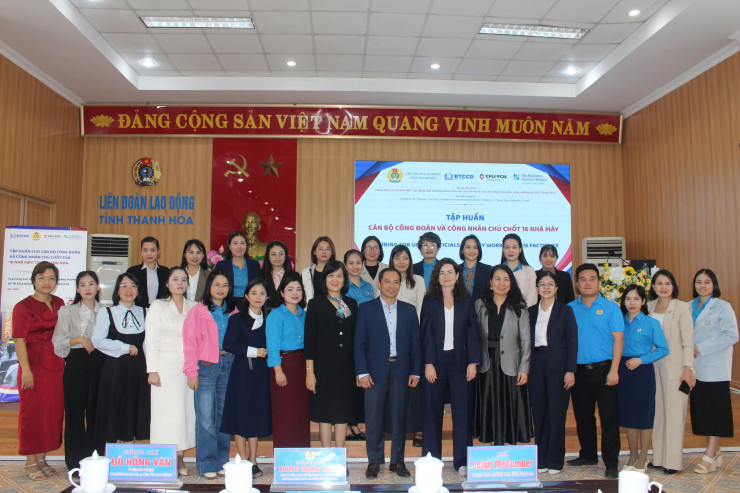
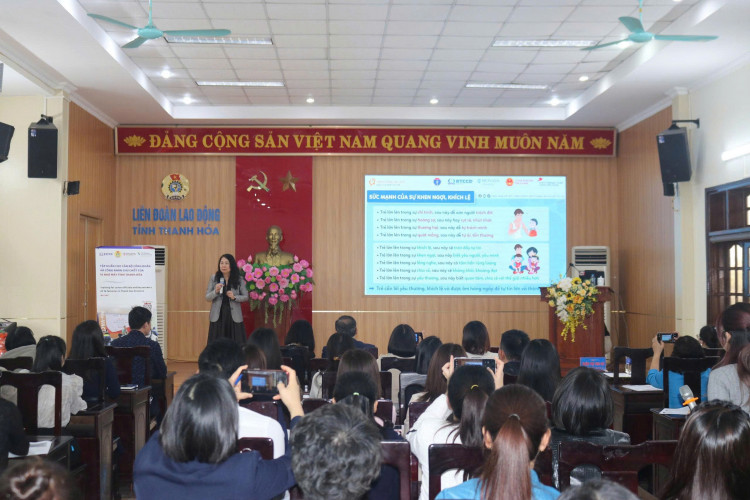
On the morning of December 10, 2025 at the Thanh Hoa Provincial Confederation of Labour (PCL), the Vietnam General Confederation of Labour (VGCL), in collaboration with the Research and Training Centre for Community Development (RTCCD), organized a training program for 110 trade union officers and key workers from 16 factories located in industrial zones across […]


On the morning of December 10, 2025 at the Thanh Hoa Provincial Confederation of Labour (PCL), the Vietnam General Confederation of Labour (VGCL), in collaboration with the Research and Training Centre for Community Development (RTCCD), organized a training program for 110 trade union officers and key workers from 16 factories located in industrial zones across the province.
The activity is part of the No-VAC Project – “Together for Change: Creating a Violence-Free Environment for Children of Industrial Zone Workers in Thanh Hoa Province,” funded by the United Nations Fund (UNF) and the Canada Fund for Local Initiatives (CFLI).
Research by the VGCL highlights that living and child-rearing conditions for many worker families remain limited:
– Only 26% of workers live in adequately ventilated housing with space for children to play;
– 52.9% of workers have little time with their children due to long working hours;
– Many parents lack skills in communication, emotional regulation, and psychological support for their adolescent children.
These factors increase the risks of stress, conflict, and domestic violence, directly affecting children’s well-being.
The No-VAC project is designed to strengthen parenting capacity, helping workers build safe, respectful, and positive home environments for their children.
During the training, participants engaged with three core content areas:
1. The importance of parental emotional regulation and building friendships with adolescent children
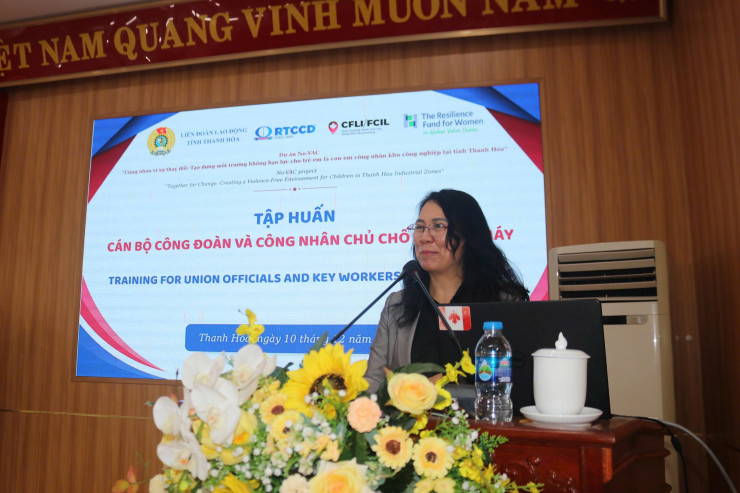
Delivered by Ms. Ha Tran, Director of RTCCD.
Participants learned about the impact of parental emotions on children’s psychology, strategies for de-escalating tension, and methods of effective communication.
2. Detailed introduction to the No-VAC project
Presented by Ms. Van Dam, No-VAC Project Coordinator at RTCCD.
The session focused on the project’s objectives, timeline, major activities, and the crucial role of trade union officers in spreading the non-violent family model.

3. Guidance on using the online learning platform for workers
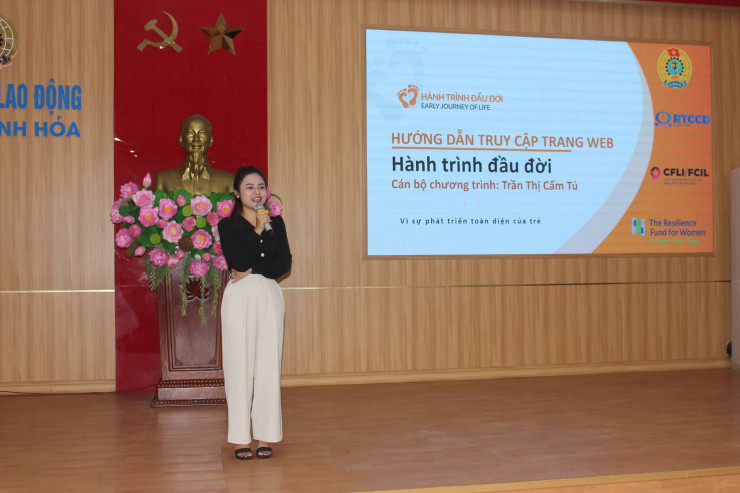
Delivered by Ms. Tran Thi Cam Tu, Online Course Officer.
The online platform enables 2,600 workers to access lessons on emotional regulation and positive communication easily.
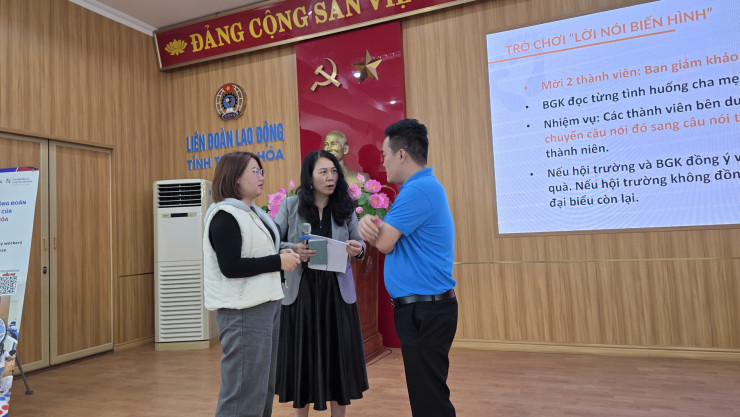
Participants also took part in group discussions, scenario-based exercises, and Q&A sessions on parenting challenges in worker families.
 |
 |
 |
 |
 |
 |
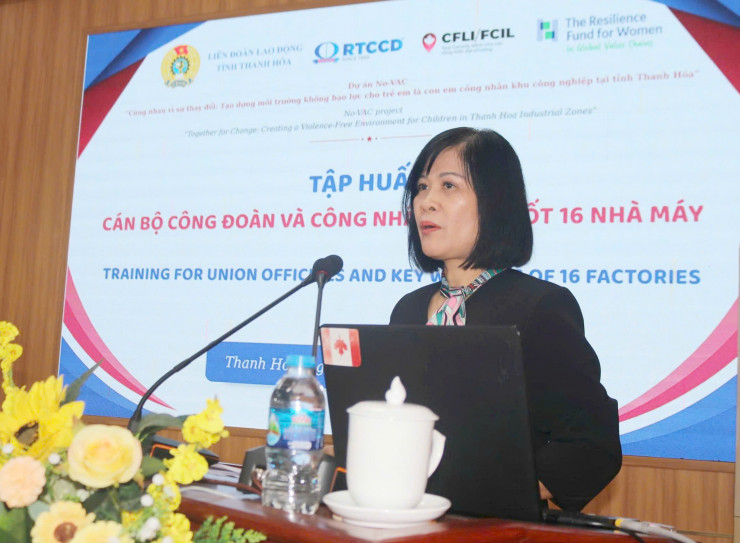
In her opening remarks, Ms. Đỗ Hồng Vân, Member of the Presidium and Deputy Head of the Labour Relations Department, VGCL, affirmed:
“This training program is highly meaningful in helping workers strengthen communication skills, manage emotions, and build non-violent family environments, thereby contributing to the holistic development of children.”
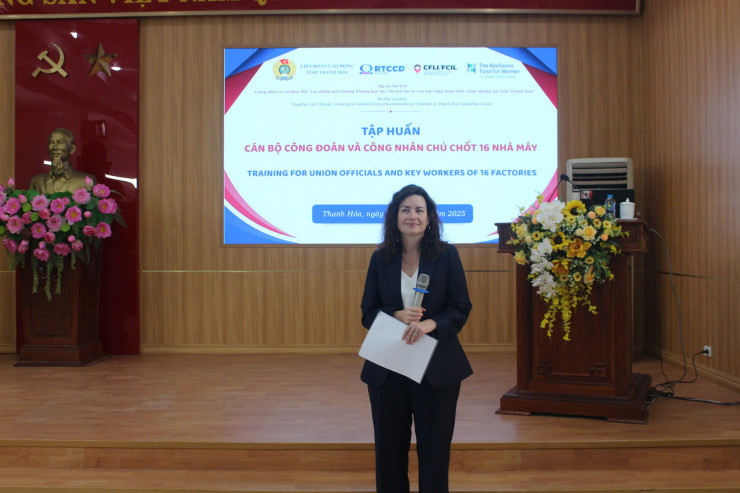
Ms. Leigh McCumber, Political Counsellor at the Embassy of Canada in Vietnam, emphasized Canada’s commitment to supporting initiatives that protect children, promote gender equality, and enhance the well-being of worker families in Vietnam.
From November 2025 to June 2026, the project is expected to benefit at least 3,510 individuals, including:\
– 110 trade union officers and key workers participating in in-person training;
– 2,600 workers completing online courses on preventing violence against women and children;
– 800 children participating in the Parent–Child Connection Day.
The project aims to establish a replicable model for factories to independently implement worker-family support activities such as parenting skill classes and children’s summer programs.
The training marks an important beginning for the No-VAC journey in Thanh Hoa.
RTCCD, VGCL, and the Thanh Hoa Provincial Confederation of Labour reaffirm their commitment to supporting workers and enterprises in building safe, loving, and violence-free families, where every child can grow and thrive.