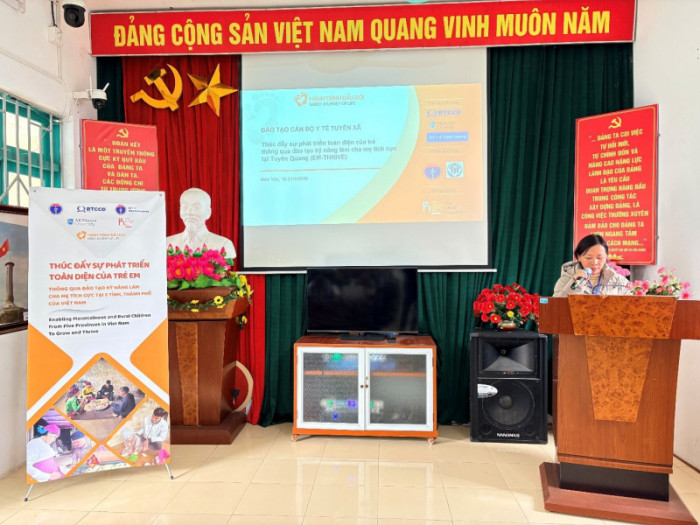
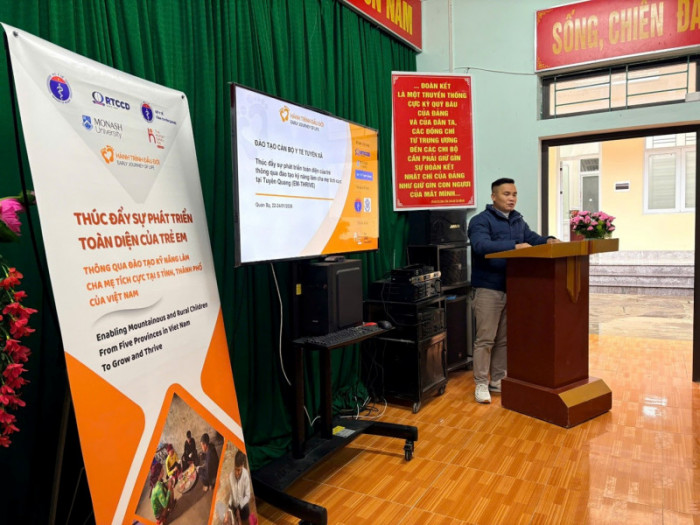
From January 19 to 24, 2026, the Research and Training Centre for Community Development (RTCCD) and the Tuyên Quang Provincial Department of Health organized two training courses for 40 commune/ward health care workers from four communes: Mèo Vạc, Đồng Văn, Quản Bạ, and Yên Minh, under the programme “Promoting the holistic development of children through training in positive parenting skills in five provinces and cities of Vietnam” (EM-THRIVE) [1].
The provincial trainers assigned by the Department of Health to deliver the training were all highly experienced instructors, including pediatric specialist doctors, Department of Health officers, and staff from the Center for Disease Control. Accompanying the provincial trainers was Dr. Lê Đức Duy, a national-level trainer from the Ministry of Health (MOH) affiliated with RTCCD, who provided support to help provincial trainers deliver knowledge and guide practical sessions as effectively as possible.
 [2]
[2]
 [3]
[3]
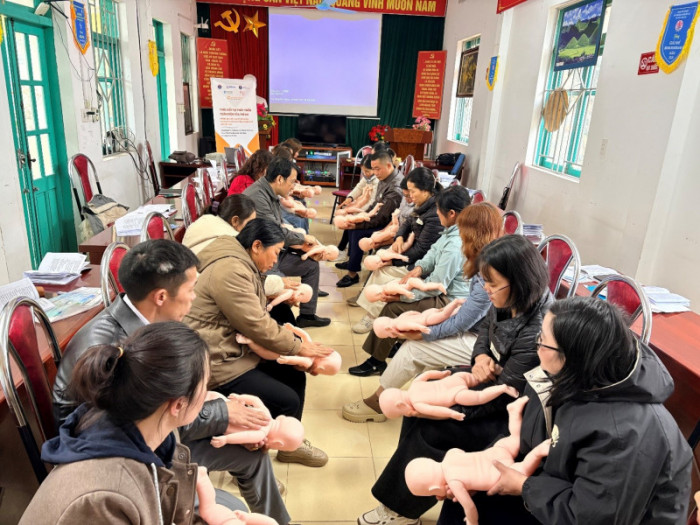
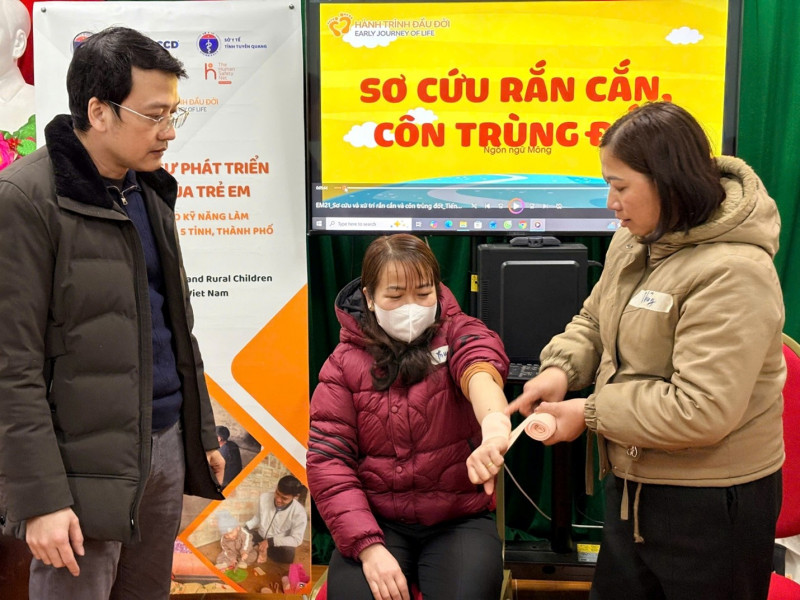
The training courses were held at the Mèo Vạc Commune Health Center (for Mèo Vạc and Đồng Văn communes, January 19–21, 2026) and at the Quản Bạ Commune Health Center (for Quản Bạ and Yên Minh communes, January 22–24, 2026). Over the three-day training, health care workers from the four communes were provided with theoretical knowledge, practical guidance, and 100% of participants directly conducted teaching demonstrations under the supervision of provincial trainers.
The training courses were evaluated through a pre-training assessment conducted before the course and a post-training assessment conducted after the course. All trainees were highly enthusiastic about the programme’s 12 topics, among which the first-aid content was rated as the most valuable by both the health care workers themselves and members of ethnic minority communities.
 [4]
[4]
 [5]
[5]
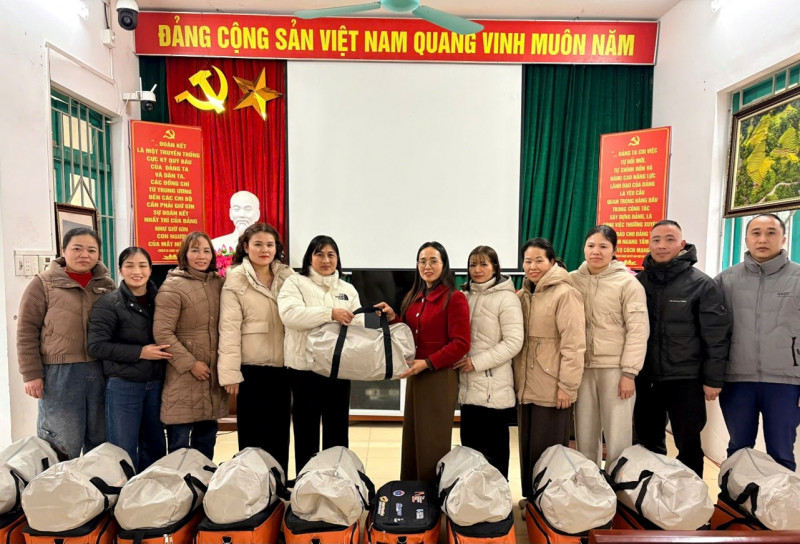
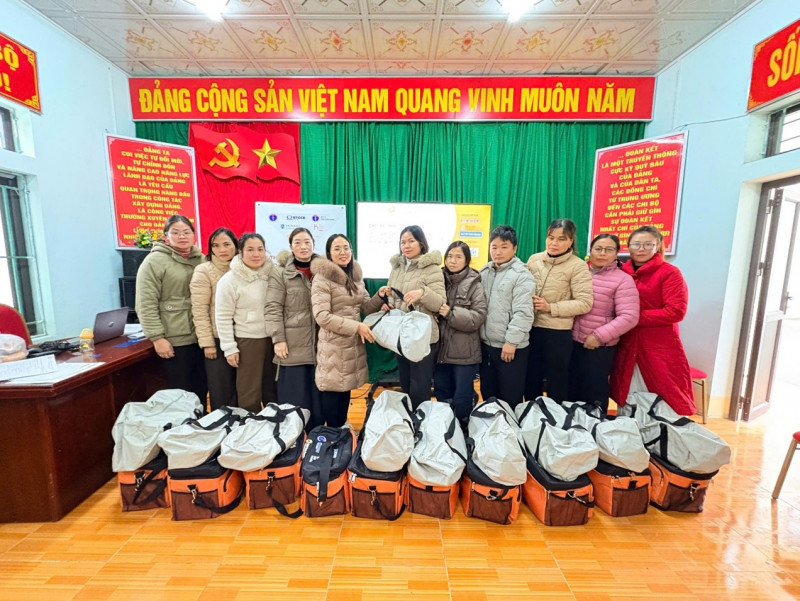
At the end of the training, 20 commune health stations were provided with toolkits to implement the programme directly with caregivers at their own health stations. The programme will continue to support health care workers through on-site supervision visits when communes begin implementing the programme.
 [6]
[6]
 [7]
[7]