Family love is not always expressed in words. For many worker families, where time is fragmented by shift work and livelihood pressures, affection is often shown through quiet, everyday actions.
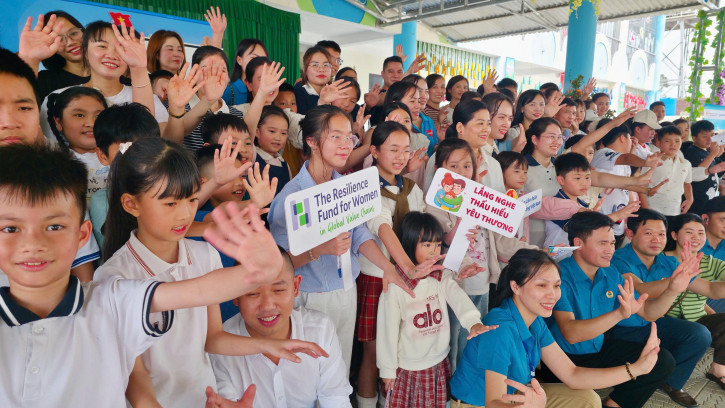
At the “Parent–Child Bonding Day” held at Kim Viet Vietnam Shoes Co., Ltd., however, those emotions were given a chance to be named and shared.
 [1]
[1]
When the factory becomes a space for family connection
From the very beginning, the atmosphere at Kim Viet Vietnam Shoes Co., Ltd. was lively, with ice-breaking activities, group games, and opportunities for families to get to know one another. For many children, this was their first time joining a program with their parents at the workplace—an experience both new and exciting.
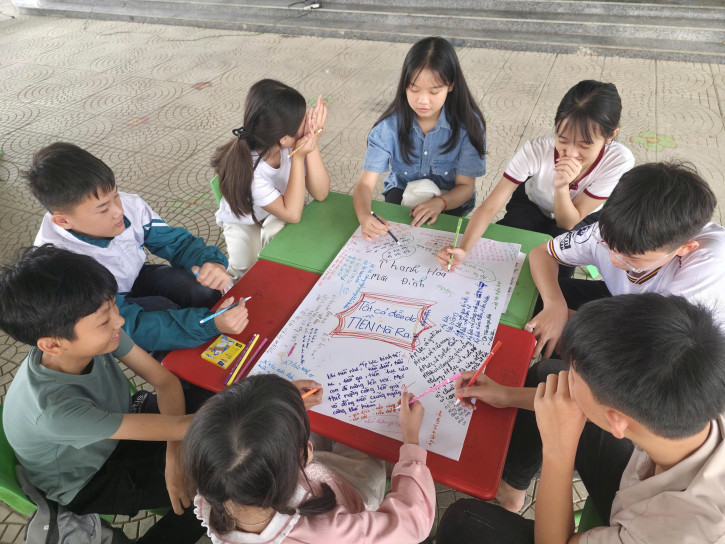
Children participated in physical games, emotion recognition activities using color cards, real-life scenarios, and group challenges. The energy was contagious as teams collaborated, encouraged one another, and reflected on their feelings after each activity.
 [2]
[2]
Through “emotional check-ins,” each child had the opportunity to identify their current emotional state—whether happy, sad, anxious, or stressed—and learn how to clearly name their emotions.
Using color cards and relatable everyday situations, children came to understand that emotions do not arise randomly, but are closely linked to thoughts and personal experiences. This helped them recognize how emotions influence behavior, and how to regulate and express emotions in a healthy way.
Notably, when placed in family-based role-play scenarios, many children experienced, for the first time, what it means to see from their parents’ perspective—reflecting on work-related stress, financial pressures, and fatigue after long working hours. Many were surprised to realize that behind strictness often lies concern and a desire to protect.
These moments of perspective-taking helped children develop deeper empathy—not only for themselves, but also for their family members.
A two-page letter and words never spoken
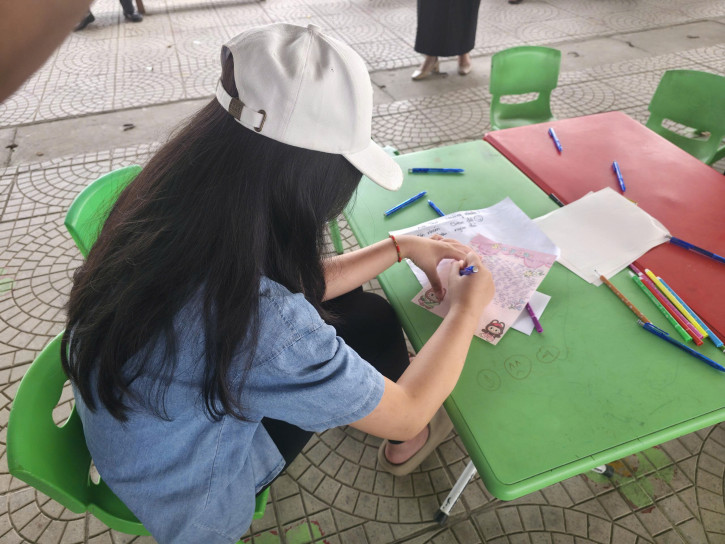
During the tea break, while many families took time to rest, some children quietly remained at their tables, writing.
One child wrote a letter to their mother—nearly two pages long.
 [3]
[3]
Each carefully written line reflected thoughts and feelings that had long remained unspoken. No one required it. No one prompted it. Yet the safe and supportive environment created by the program encouraged children to express themselves.
It was not just an activity—it was a genuine moment of connection.
Shared activities – where emotions are finally spoken
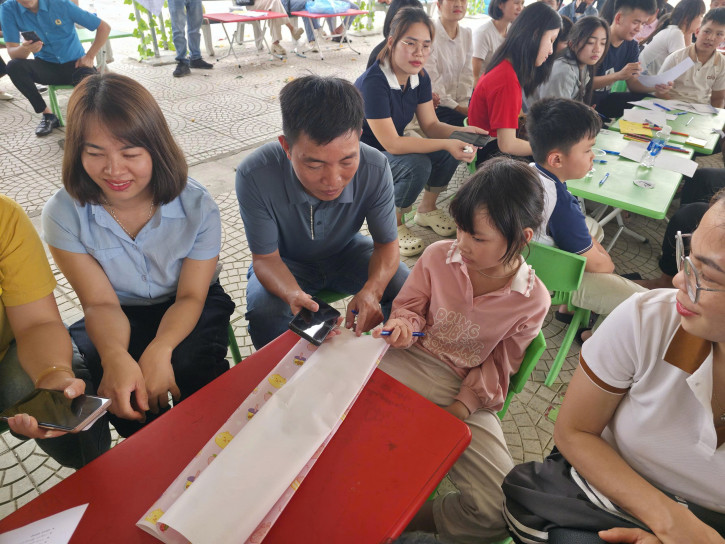
Following separate sessions, parents and children came together for joint activities, including team-based games, a mini workshop on the “Five Love Languages,” and writing messages to one another.
 [4]
[4]
As the activities deepened, the atmosphere became more emotional. Many children expressed love to their parents directly for the first time. Some spoke softly, some with trembling voices, and some broke into tears as they said:
“I love you, Mom and Dad.”
These simple words moved many parents. Tears were shed—not out of sadness, but from the realization that their children had grown and longed to be understood.
In return, many parents also expressed apologies and shared their feelings with their children—some for the very first time. The usual distance between “parent and child” was replaced by genuine human connection.
Understanding begins with the smallest moments
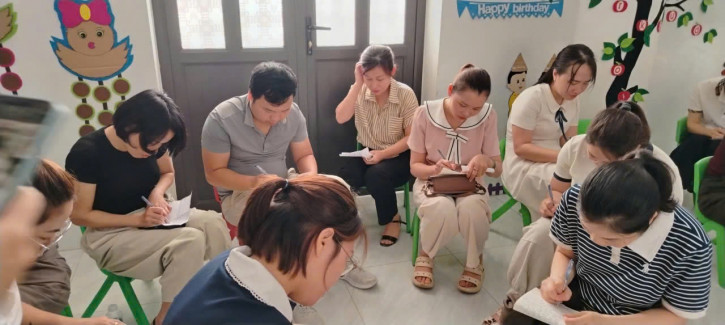
One parent shared:
“After work, I’m usually too tired and rarely spend time playing with my child. Today, being able to join activities together at the company made me really happy.”
 [5]
[5]
Bringing the program directly into the factory not only made participation more accessible for workers, but also helped bridge the gap between work and family life—allowing parents and children to truly be present with one another.
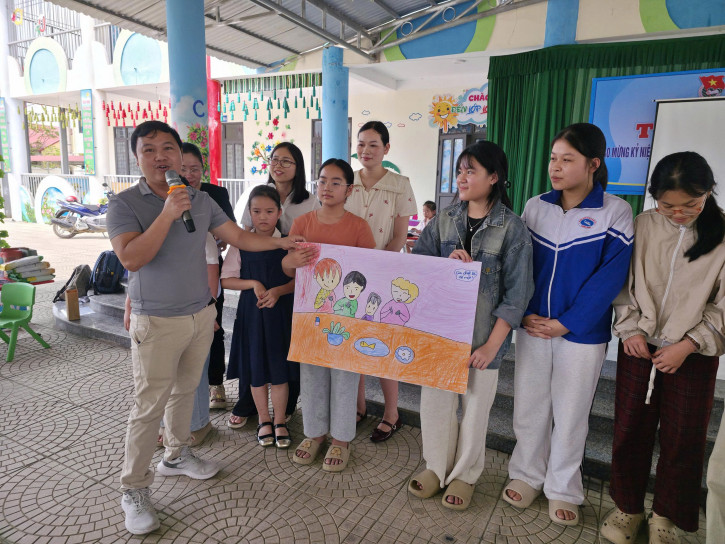
Many families smiled as they realized that each person expresses love differently: through actions, words, or simply spending time together.
This understanding helped strengthen the parent–child relationship in meaningful ways.
 [6]
[6]
The program was organized by the Research and Training Centre for Community Development (RTCCD) in collaboration with the Vietnam General Confederation of Labour and the Thanh Hoa Provincial Federation of Labour, as part of a series of initiatives designed specifically for workers in industrial zones.
The activity is under the No-VAC Project, funded by the United Nations Fund (UNF) and the Canada Fund for Local Initiatives (CFLI), aiming to enhance parenting skills, improve family communication, and promote mental well-being for children.
A short day, but enough to make a difference
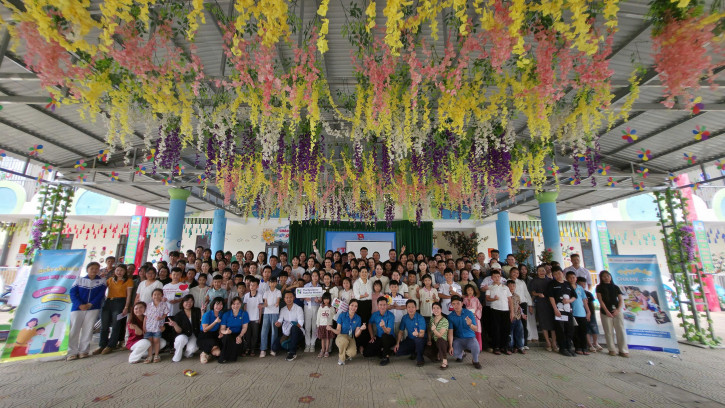
The program has come to an end, but the hugs, the tears, and the handwritten letters remain.
 [7]
[7]
Sometimes, all it takes is a safe space and a moment of pause for parents and children to reconnect.
Because in the end, what matters most is not how much we say—but whether we truly listen.