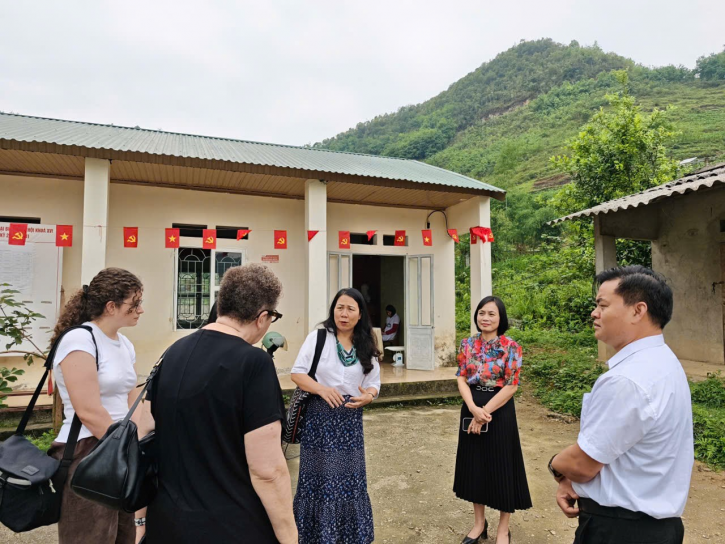
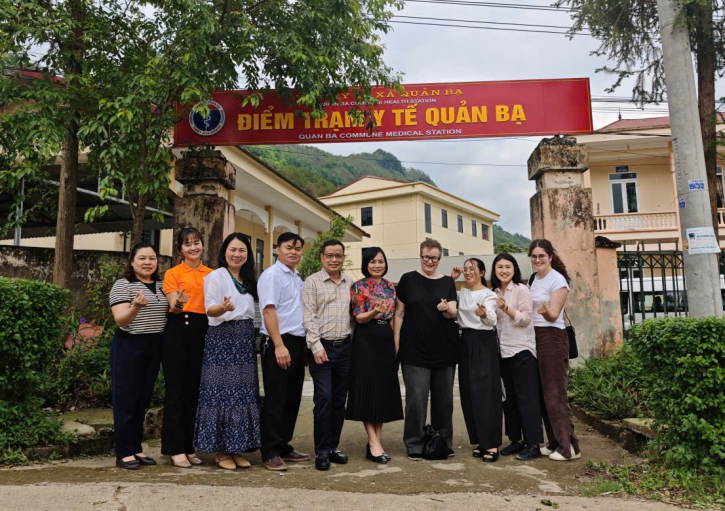
On May 8, 2026, experts from Monash University visited and worked with the Tuyen Quang Department of Health regarding the implementation of the “First Journey” – EM-THRIVE program across 20 communes and wards with Mong ethnic minority populations in the province.
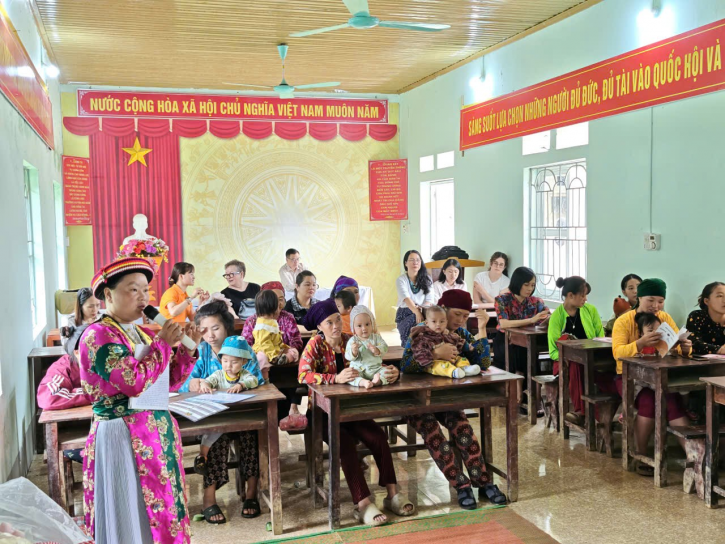
Together with the provincial health sector, the delegation observed village health worker Giang Thi Mai in Khung Nhung village, Quan Ba commune, facilitating a positive parenting guidance session integrated into community immunization activities under the theme “Supporting Early Cognitive Development in Children.” Similar to other vaccination sites, the Khung Nhung outreach point implemented parenting guidance activities for families following the direction of the Department of Health. This was the second session conducted by Ms. Mai since completing the training program in March 2026.
 [1]
[1]
Professor Jane Fisher shared:
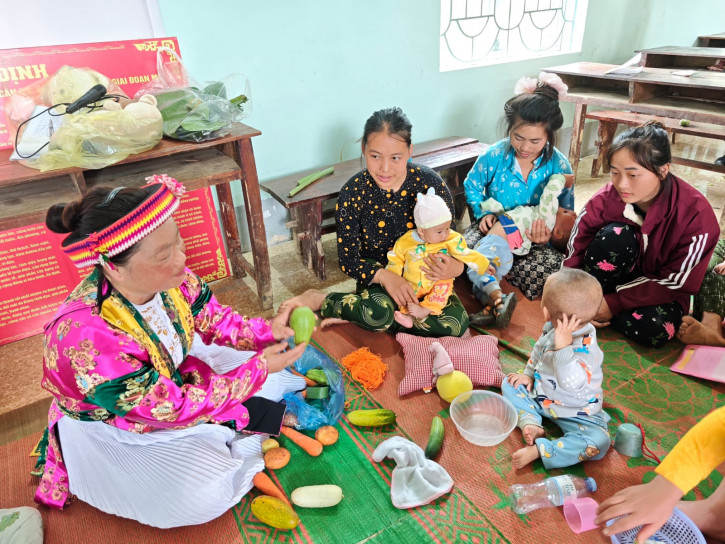
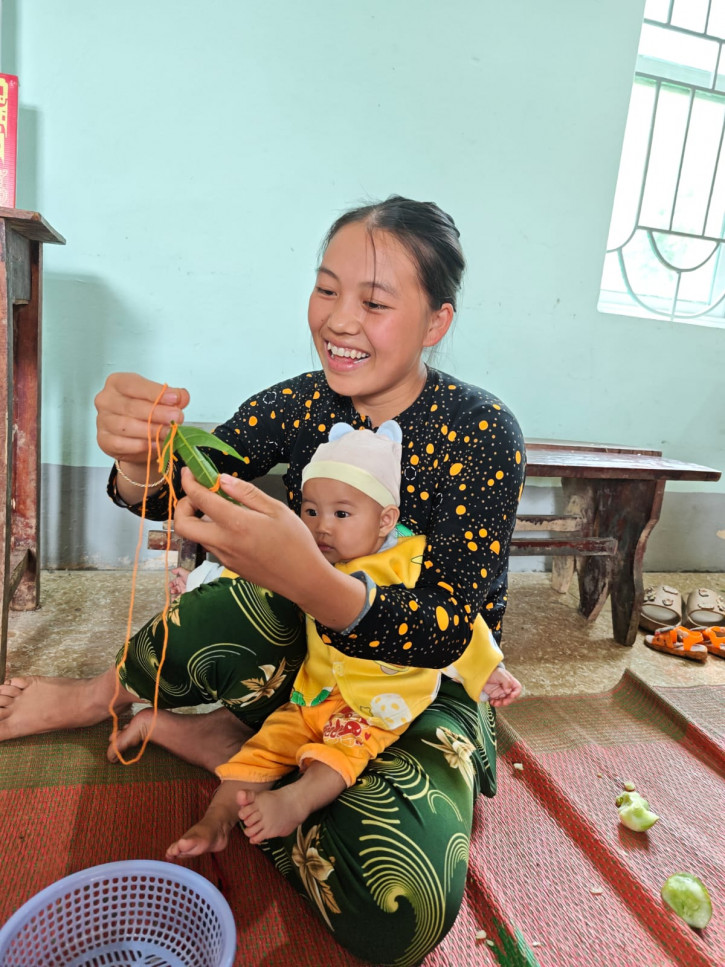
“We were highly impressed by the preparation, facilitation skills, and use of videos during the session. Beyond providing theoretical guidance, the village health worker also used household items and locally available vegetables and materials as practical examples for families. Encouraging all participants to practice during the session is an excellent way to help parents feel confident making toys or using available household items without needing to purchase new materials. This is a great example of how everyday resources can be used to support children’s cognitive development from an early age. Such an impressive session reflects the strong support and guidance provided by provincial trainers through both training courses and supportive supervision visits.”
 [2]
[2]
 [3]
[3]
Dr. Do Thi My, Deputy Director of the Tuyen Quang Department of Health, stated:
“EM-THRIVE is a highly useful and necessary intervention for both health workers and local communities. The former Ha Giang area has more than 87% ethnic minority populations, including over 32% Mong people. Educational attainment remains limited, many people have limited Vietnamese language proficiency, and outdated traditional practices still exist. Although the health sector has implemented various target programs and NGO-supported projects, most have had limited coverage and short implementation periods. We hope the program will continue to receive support to expand across all communes and wards, prioritizing Mong communities and ensuring sustainable integration into local health system activities to improve awareness among children and communities more broadly.”
 [4]
[4]
Ms. Nguyen Thi Binh, a provincial program trainer, shared:
“Having participated in the program from the planning stage, intervention site selection, trainer training, and commune-level training activities, I truly believe this program is extremely necessary for the community. In particular, the Mong-language videos have made communication much easier and more accessible for local people.”
Beyond early childhood development, the Department of Health also expressed its interest in collaborating with Monash University and the Research and Training Centre for Community Development (RTCCD) to mobilize resources addressing two maternal and child health priorities currently faced by the local health sector: malnutrition among children under five and adolescent reproductive health.
 [5]
[5]
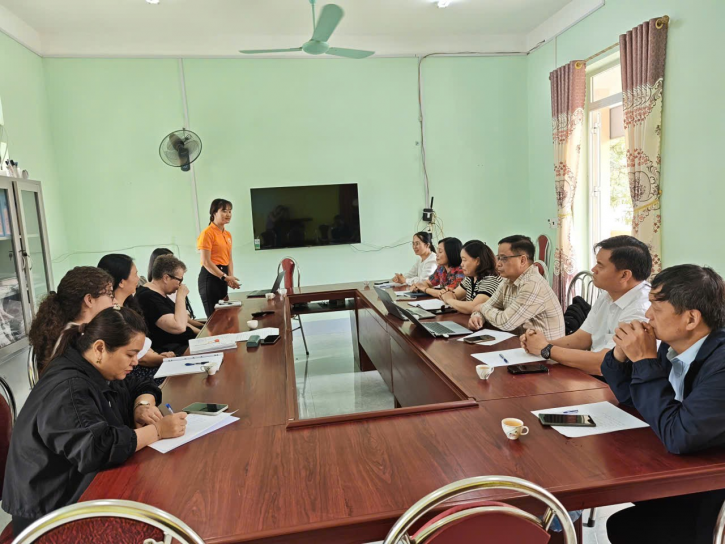
During the meeting, representatives from Monash University and RTCCD committed to mobilizing resources to expand the model throughout Tuyen Quang Province. Proposed support includes reviewing budgets to provide each commune health station with a mini projector and transportation allowances for village health workers conducting parenting guidance sessions.
The Department of Health also committed to using local government funding to provide additional training for commune health station staff.
All parties agreed to strengthen collaboration and sustainably integrate the program into routine immunization activities to improve awareness and caregiving practices among families in ethnic minority communities across Tuyen Quang Province in the future.
 [6]
[6]