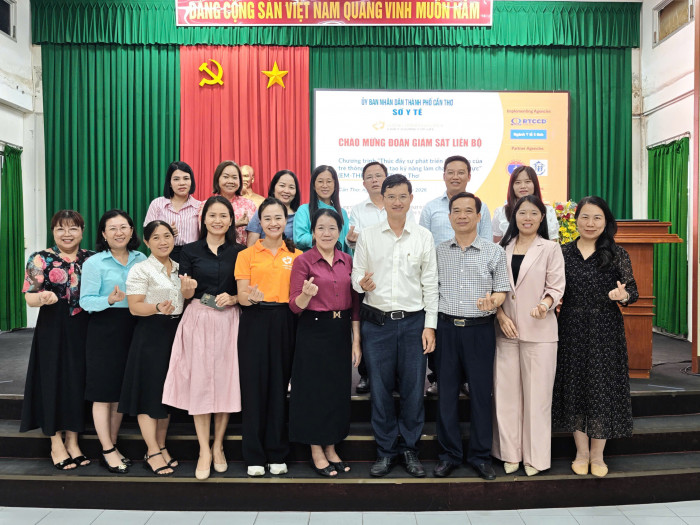
On 2 July 2026, an Inter-Ministerial Monitoring Visit was conducted in Can Tho City to review the implementation of EM-THRIVE (Enabling Ethnic Minority (EM) and Rural Children From Five Provinces in Viet Nam to Grow and Thrive). The delegation met with the Can Tho Department of Health, the City Centre for Disease Control (CDC), and representatives from relevant departments and agencies to assess the project’s implementation progress and quality.
 [1]
[1]
The visit focused on reviewing compliance with project regulations, assessing the effectiveness of cross-sectoral coordination, and identifying recommendations to strengthen project management and implementation in the coming period.
Can Tho is one of the five project sites selected for implementation during 2025–2027, covering 32 communes and wards in Can Tho City and 20 Khmer ethnic minority communes and wards in the former Soc Trang area. EM-THRIVE is designed by Monash University and implemented by the Research and Training Centre for Community Development (RTCCD) in partnership with the Ministry of Health and provincial and municipal Departments of Health.
The monitoring delegation included representatives from the Ministry of Health, Ministry of Public Security, Ministry of National Defence, Ministry of Finance, and the Vietnam Union of Science and Technology Associations (VUSTA). The delegation was welcomed by Dr. Ha Tan Vinh and Dr. Nguyen Van Them, Deputy Directors of the Can Tho CDC, together with representatives from the Department of Health, the local Union of Science and Technology Associations, other government agencies, and local media.
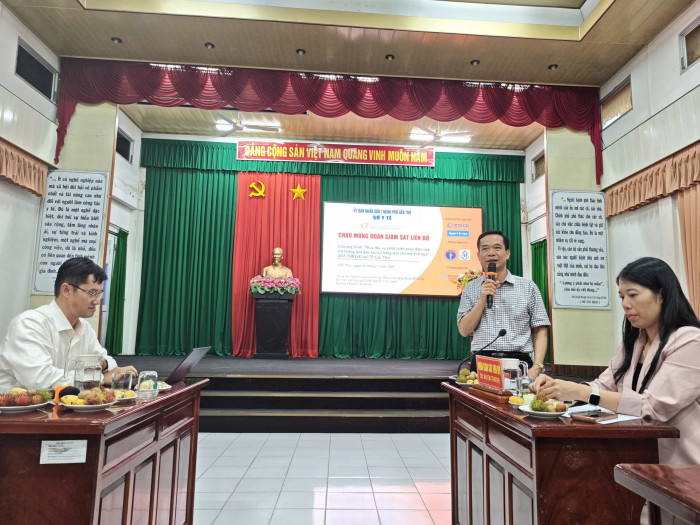
Opening the meeting, Dr. Tran Dang Khoa, Deputy Director General of the Department of Maternal and Child Health under the Ministry of Health, highlighted the long-term value of the project:
“EM-THRIVE is a meaningful initiative with the potential to create lasting impacts on children’s development. The project aims to improve caregivers’ knowledge, attitudes, and practices to support children’s healthy growth and development. The Department of Maternal and Child Health has closely followed the programme from its pilot phase in Ha Nam Province through its expansion to five provinces and cities, and we are confident that participating localities will continue to achieve positive results.”
 [2]
[2]
During the meeting, Ms. Tran Thi Thu Ha, Director of RTCCD, presented an update on project implementation in Can Tho across the project’s two core components. To date, the programme has trained 456 healthcare workers and supported more than 5,000 caregivers of young children through practical parenting sessions. The report highlighted the strong leadership of the Department of Health, the commitment of local authorities, and the active engagement of frontline health workers as key factors contributing to the programme’s successful implementation.
Alongside these achievements, the project continues to face several challenges, including organisational restructuring following administrative mergers, limited communication equipment, and difficulties in reaching caregivers in remote and underserved communities.
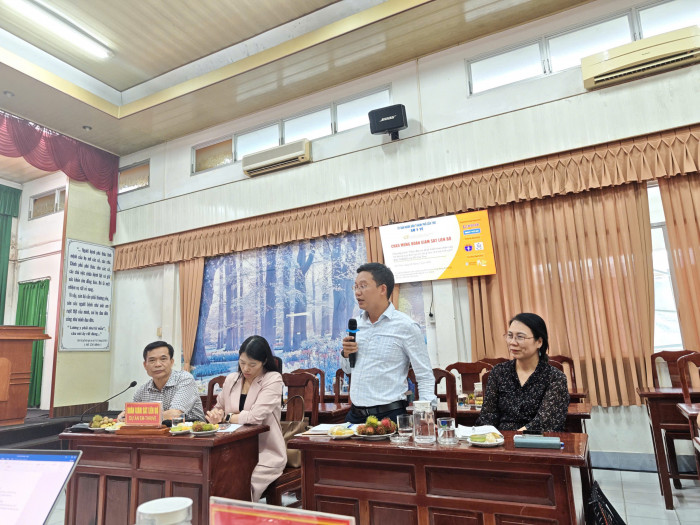
Representing the Ministry of Public Security, Mr. Nguyen Van Tai from the Department of Internal Political Security commended the project’s practical value:
“I am pleased to see the project delivering meaningful benefits to families in supporting children during the first 2,000 days of life. I hope many more parents and caregivers will have the opportunity to participate in the programme.”
 [3]
[3]
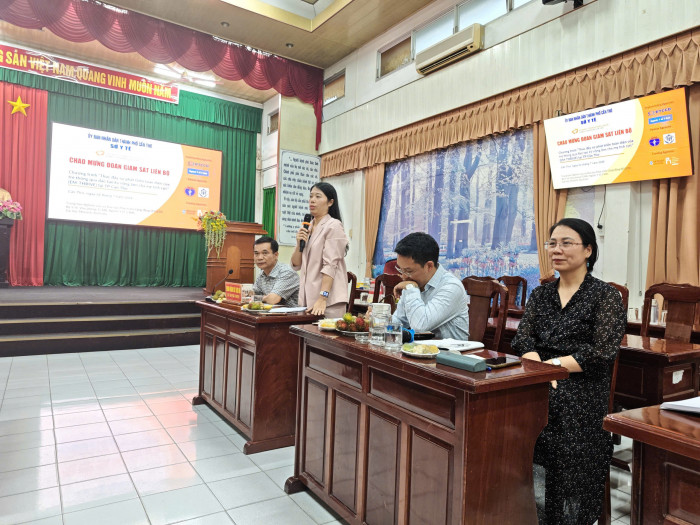
Senior Colonel Nguyen Thuy Hoa, Chief of Office of the Population, Family and Children Committee under the Ministry of National Defence, underscored the importance of cross-sectoral collaboration in expanding the programme’s impact:
“With the active engagement of the Women’s Union, the Youth Union, and other mass organisations alongside the health sector, the programme can reach many more families. Today, many young children are primarily cared for by grandparents or preschool teachers, making it essential to equip all caregivers with the knowledge and skills needed to support children’s healthy development.”
She also shared the successful emergency rescue of a two-year-old child who had choked on sticky rice in Ba Che Commune, Quang Ninh Province, illustrating the life-saving importance of equipping communities with essential childcare knowledge and first-aid skills.
Representing VUSTA, Ms. Nguyen Thi Thanh Huyen, Deputy Head of the Department of Science and International Cooperation, described EM-THRIVE as a practical and impactful initiative, particularly for remote and ethnic minority communities. She also encouraged stronger collaboration with VUSTA’s local member organisations to help sustain and expand project activities in the future.
Ms. Ta Thanh Que, Senior Officer of VUSTA’s Department of Science and International Cooperation, also recognised the effectiveness of the project’s blended learning approach, combining online learning with hands-on community practice. She noted that this model is especially relevant as many parents now seek parenting information online but often lack access to reliable and evidence-based sources.
 [4]
[4]
Participants agreed that promoting early childhood care and development is a shared responsibility that extends beyond the health sector and requires coordinated action across multiple sectors, government agencies, mass organisations, and communities. Many also expressed hope that the successful interventions developed through EM-THRIVE would be integrated into the National Strategy for Child Development (2026–2035), the National Programme on Comprehensive Early Childhood Development, and other national initiatives to improve children’s access to quality health and developmental services.
The visit concluded with recognition of the encouraging progress achieved across the project’s implementation areas in Can Tho. Participants reaffirmed their commitment to sustaining and expanding the programme through continued cross-sectoral collaboration, helping build a stronger foundation for children across Viet Nam to grow, thrive, and reach their full potential.